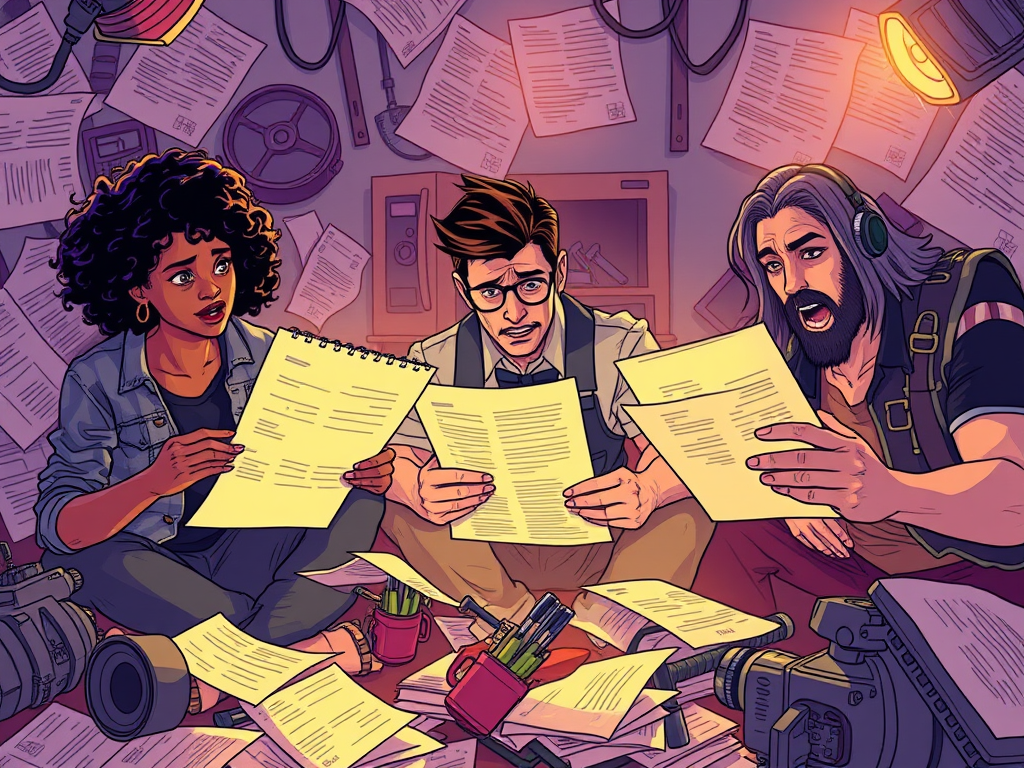
When I first got involved in independent filmmaking, I learned one of the most valuable lessons of my creative career: planning is everything. The experience of working on The One Eyed Dog—a 20-minute short film that took nearly a year to complete—taught me just how crucial it is to have a solid plan before diving into any creative project.
The Chaos of No Plan
At the start of The One Eyed Dog, we had little more than an idea of a story. There was no script, no structured plan—just a group of creative people trying to piece something together weekend by weekend. Every Saturday, we’d spend most of the day figuring out what to shoot on Sunday, and then hope for the best when the cameras rolled. That lack of planning stretched what should have been a straightforward project into a drawn-out process full of inconsistencies and wasted time.
One of the biggest challenges was that the ending wasn’t even finalized until the weekend before we shot it. Originally, the film had a gaping plot hole in its conclusion, which we didn’t realize until it was almost too late. We scrambled to rewrite and restructure scenes so that everything would make sense with what we had already filmed.
That’s not to say the experience was all frustration—far from it. Working on The One Eyed Dog was incredibly fun, and along the way, I developed a deeper appreciation for storytelling, cinematography, and visual effects. I immersed myself in books on filmmaking, learning as much as I could about the process. Out of everything I explored, those three elements stood out as my favorites, shaping the way I approach creativity to this day.
Implementing Structure and the Shift in Productivity
At some point, I suggested a new approach: instead of spending entire Saturdays trying to plan for Sunday’s shoot, we should split our time more effectively. Half of Saturday would be dedicated solely to brainstorming and writing, while the other half would focus on planning the logistics for filming. This small shift made a huge difference. Our Sunday shoots became much more productive because we knew exactly what we needed to accomplish, and we started generating additional story ideas in the process.
This structured approach to planning led to the creation of Welcome to Tucson. During those brainstorming sessions, the director and I both developed our own ideas for what Welcome to Tucson could be, and though we ultimately took different directions with it, that structured process sparked something bigger than just the film we were working on.
Applying the Lesson to Writing
That experience solidified something for me: a complete story outline is essential before starting any major creative project. When I began writing Welcome to Tucson as a novel, I didn’t want to make the same mistake we had made on The One Eyed Dog. I built an outline first, filling in missing story beats and ensuring that the narrative flowed from beginning to end. Because of that, I didn’t waste time backtracking or fixing major plot holes halfway through the process.
Even beyond that novel, the habit of planning before creating has stuck with me. Now, whenever I start a new story—whether it’s a short piece or a novel—I take the time to structure the key elements before diving into the writing itself. I still allow for flexibility, but I make sure I’m never just blindly moving forward without a clear idea of where I’m going.
Final Thoughts
If I could go back and give myself advice during The One Eyed Dog, it would be this: plan first, then create. Having an idea is great, but without structure, that idea can easily turn into a frustrating mess. The same lesson applies to anyone working on a creative project, whether it’s a film, a novel, or even something as simple as a blog post. The more time you invest in planning, the smoother and more efficient the creative process will be.
And if I ever find myself working on another independent film? You can bet I’ll be asking, “Do we have a finished script?” before the cameras start rolling.
 Bradley Page aka Producer Rage
Leave a comment