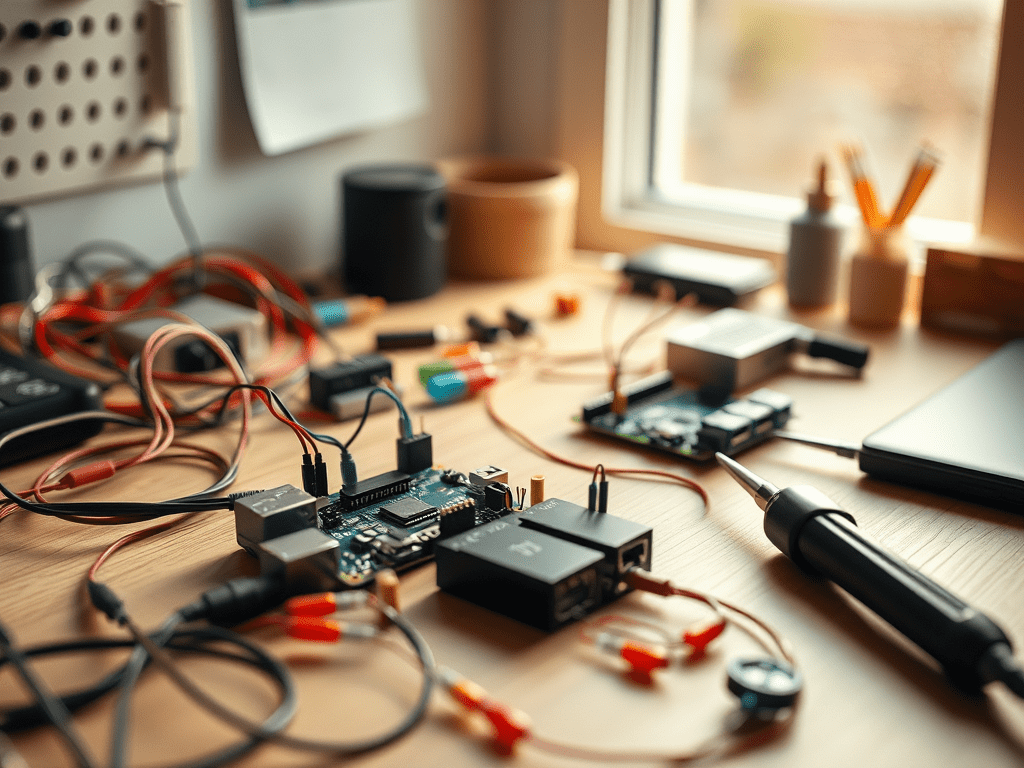
Hey tech enthusiasts! Today, I want to talk about something dear to me. It’s DIY electronics and the fascinating world of microcontrollers. I’ve always loved tinkering with gadgets. I enjoy taking things apart (and occasionally putting them back together). I love figuring out how they work. Are you curious about electronics? Or have you always wanted to try a project using an Arduino or Raspberry Pi? If so, this post is for you. Let’s explore how coding and a few components can bring your ideas to life!
How I Got Started:
My journey with electronics began back in 2000 when I started learning HTML4 and making simple websites for fun. As I dove deeper into tech, I started experimenting with different coding languages and hardware. Eventually, I discovered the world of microcontrollers, like Arduino and Raspberry Pi. This discovery opened up a whole new realm of possibilities.
With these little devices, I could go beyond coding for screens. I started building things that interacted with the physical world. For me, it was the ultimate blend of creativity, problem-solving, and hands-on work. Since then, I’ve built all sorts of projects. These range from simple LED displays to automated devices. I have even created a few Android apps along the way.
Why Microcontrollers?
Microcontrollers like Arduino and Raspberry Pi are incredibly powerful tools for anyone interested in electronics, regardless of skill level. They’re affordable, versatile, and – best of all – beginner-friendly. Here’s a quick breakdown of why I think these devices are so great:
- Accessibility: You don’t need a degree in engineering to get started. Both Arduino and Raspberry Pi have huge communities and countless tutorials online to help you get going.
- Versatility: With microcontrollers, the possibilities are endless. You can build everything from smart home devices and robots to music projects and wearable tech.
- Hands-On Learning: There’s something uniquely satisfying about coding a project and seeing it physically come to life. It’s a different experience from traditional software development and gives you immediate feedback.
- Cost-Effective: Most microcontroller boards and components are reasonably priced. You don’t need to break the bank to experiment with hardware. A basic Arduino kit or a Raspberry Pi board is all you need to start.
Projects I’ve Worked On (and What I Learned):
Over the years, I’ve tackled a variety of DIY electronics projects. Each one taught me something new and kept me coming back for more. Here are a few of my favorites:
- Smart Light Control: One of my first projects was a smart light setup using Arduino. I wired up an LED strip which I could control it with my phone. This allowed me to change colors and brightness with a tap. This was my introduction to Bluetooth modules and app integration. It opened my eyes to the potential of home automation.
- Weather Station with Raspberry Pi: For this project, I used a Raspberry Pi. I added a few sensors to measure temperature, humidity, and air pressure. The data would update to a web dashboard I created, giving me real-time environmental readings. This project taught me a lot about using sensors, working with APIs, and visualizing data. Plus, it was cool to have my own mini weather station at home!
- Motion-Activated Camera: I used a Raspberry Pi and a small camera module. I created a motion-activated camera system. It would snap photos whenever movement was detected. I ended up using it as a basic security setup for my workshop. This project helped me learn about image processing. It also taught me about integrating different components. Moreover, it had a practical application I still use today.
Resources and Guides Coming Soon:
I know that diving into electronics can seem overwhelming, especially with so many components, coding languages, and tools out there. That’s why I’m planning to share some of the resources I use in future posts. I’ll break down the best tutorials. I’ll show you handy components. I’ll explain coding libraries that have helped me the most along the way. If you’re looking to start your own DIY project, these resources will give you a solid foundation. They will hopefully inspire you to start building.
Tips for Beginners:
If you’re interested in getting started with DIY electronics and microcontrollers, here are some tips I wish I knew when I first began:
- Start Small: It’s tempting to jump straight into ambitious projects. Yet, starting with simple ones will build your confidence. It will also develop your foundational skills. Try something easy, like blinking an LED or setting up a temperature sensor.
- Don’t Be Afraid to Fail: Tinkering with electronics involves a lot of trial and error. It’s normal for things to not work on the first try. The key is to troubleshoot and keep experimenting. You’ll learn more from your mistakes than from successes.
- Take Advantage of the Community: Arduino, Raspberry Pi, and electronics communities are incredibly welcoming. Sites like Instructables, Hackster.io, and GitHub have tons of free projects and guides. Don’t hesitate to ask for help or look up tutorials if you’re stuck.
- Invest in Basic Tools: A soldering iron, a multimeter, and a breadboard are essential. These tools will make your life a lot easier. Having them on hand will save you time and make more advanced projects possible.
- Document Everything: Keeping notes or a project journal can be a lifesaver. It is especially helpful when you’re troubleshooting. It also helps when you are trying to recreate a setup. Plus, it’s rewarding to look back and see how much you’ve learned over time.
Why I Love DIY Electronics:
DIY electronics is more than just a hobby for me. It’s a way to explore creativity. It allows me to challenge myself. I also learn new things. Bringing an idea to life with your own hands is magical. Watching it work is a satisfaction like nothing else. Whether it’s a simple gadget or a more complex device, each project teaches me something valuable and keeps me inspired.
If you’re someone who enjoys creating, problem-solving, and working with technology, I highly recommend giving DIY electronics a try. You never know – you might just discover a new passion!
Conclusion:
Thanks for joining me on this dive into the world of DIY electronics and microcontrollers! I hope this post gives you a glimpse into what makes this hobby so enjoyable. If you’re a fellow tech enthusiast, I’m sure you will find it fascinating. Or, if you’re just curious about the field, I hope this post provides some insight. Look for upcoming posts. I will share the resources and tools that have helped me on this journey. And as always, feel free to reach out if you want to chat about electronics or share your own projects!
 Bradley Page aka Producer Rage
Leave a comment